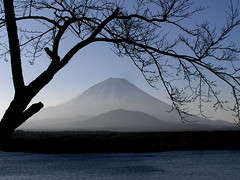
Japan as I seen

I would like to share something that I knew and seen about Japan...

My Photo
Name:
Location: kawagoe, saitama, Japan

Sunday, July 23, 2006

Summer Festival = Obon


bonodori23
Originally uploaded by pink_emmie_bat.
O-bon is a Japanese Buddhist holiday to honor the departed spirits of one's ancestors. This Buddhist festival has evolved into a family reunion holiday during which people from the big cities return to their home towns and visit and clean their ancestors' graves. Traditionally including a dance festival, it has existed in Japan for more than 500 years. It is held from 13th of July to the 15th ("Welcoming Obon" and "Farewell Obon" respectively) in the eastern part of Japan (Kanto), and in August in the western part. In recent years, however, most parts of Tokyo, and by extension, the media, hold Obon in August to coincide with the summer holiday period. Obon shares some similarities with the predominantly Mexican observance of el Día de los Muertos.

Obon is a shortened form of the legendary Urabonne/Urabanna (Jap. 于蘭盆会 or 盂蘭盆会, urabon'e). It is Sanskrit for "hanging upside down in hell and suffering" (Sanskrit:Ullambana). The Japanese believe they should ameliorate the suffering of the "Urabanna".

Bon Odori originates from the story of Mokuren, a disciple of Shakyamuni, who saw a vision of his deceased mother in the Realm of Hungry Ghosts where she was indulging in her own selfishness. Greatly disturbed, he went to the Buddha and asked how he could release his mother from this realm. Buddha answered, "On the 15th of July, provide a big feast for the past seven generations of dead." The disciple did this and, thus, saw his mother's release. He also began to see the true nature of her past unselfishness and the many sacrifices that she had made for him. The disciple, happy because of his mother's release and grateful for his mother's kindness, danced with joy. From this dance of joy comes Bon Odori or "Bon Dance", a time in which ancestors and their sacrifices are remembered and appreciated.
Toro Nagashi is the floating of paper lanterns on the last evening of Obon, to guide the spirits of the departed back to the other world.

Bon Odori (盆踊り, meaning simply Bon dance) is an event held during Obon. It is celebrated as a reminder of the gratefulness one should feel toward one's ancestors.

The O-Bon festival is observed all over the country. Originally a Nenbutsu folk dance to express the effusive welcome toward the spirits of the dead, the style of celebration varies in some aspects from region to region. Prefectures often have their own ways of dancing the Bon Odori and their own music to go with it. A Bon Odori in Okayama prefecture will be completely different from one in Kanagawa prefecture. People line up around a high wooden building made especially for the festival called a yagura. There are many kinds of music that go with the dance. The music varies from classical music to Japanese traditional music such as the Makkou Onndo.

The tradition is said to have started in the later years of the Muromachi period as a public entertainment. In the course of time, the original religious meaning has faded, and the dance has become associated with summer.

Sunday, July 16, 2006

Hanabi, a summer fest...


kobe hanabi #2
Originally uploaded by ponkan.
The sounds of thunderous booms, crackles and pops might have evoked natural fear, but the spectacular flashes, sparkles, and fizzles of fireworks superimposed against a backdrop of billions of celestial stars had been well worth the risks of danger. So thought the Chinese who first invented fireworks solely for amusement. To this very day, fireworks have become traditional entertainment dazzling and mesmerizing millions of Japanese viewers throughout the country.

The Japanese considered hanabi (fireworks) as "flowers of fire" - brilliant bursts in various forms and colors of poignant beauty. Like the splendid cherry blossoms' brief existence, fireworks flash in all their pomp and glory for a fleeting moment only to vanish into thin air. Since fireworks displays have become such popular events, it's common to see many people strolling in yukatas (cotton kimonos), drinking cold beer and carrying uchiwas (round-shaped fans) - everyone from the neighborhood turned up for the festivity on muggy summer nights.

In the past, firework performances were held as exclusive entertainment for the privileged class. After wining and dining on a boat, the daimyos and their lovely courtesans often watched fireworks hurled into air as they drifted along the Sumida River. Hence, shooting fireworks along a river has become a traditional practice. In fact, fireworks show over the Ryogoku Bridge on the Sumida River marks the opening ceremony of the boating season.

Fireworks would not be what it is today without the contribution of two great craftsmen - Kagiya and Tamaya. Not only did they elevate the art of fireworks but also promote fireworks status as a popular diversion among the commoners. Dexterous in pyrotechnics, Kagiya started a family business in 1659, which rapidly expanded along with his fame and influence in society. As an apprentice of Kagiya, Tamaya soon became a master in his own right, even surpassing the wizardry of his former teacher. Trying to outdo his old master, the ambitious Tamaya often challenged Kagiya to stunning fireworks performances in public. In a twist of fate, Tamaya's popularity came abruptly to an end when one of his innovative experiments caused a disastrous fire that burned village houses to the ground. Consequently, he was banished and his family heritage ruined, but his legacy lives on. To this day, many of Tamaya's exquisite fireworks achievements engrained in ukiyoe (woodblock prints) are sold in souvenir shops.

With the public's obsession with fireworks, it's not surprising that Japanese fireworks have evolved into an art of its own. The Japanese created the fabulous design of a three-dimensional global dispersion that resembles a chrysanthemum, one of the most elegant presentations in pyrotechnics. The firework shell is globular packed with several layers of different colors of powder to alter the hue of illumination while burning in the air. When the casing explodes, each star uniformly positioned around the core is strewn into space in equal distance from the center of the blast.

The Japanese fireworks fall mainly under three categories based on different scattering results: warimono, kowarimono, and pokamono. The warimono bursts into sizzling stars distributed in equal distance from the center to resemble petals of a chrysanthemum. The key to projecting a large circular distribution effect lies in the balance of tension between the thickness of the shell casing and the strength of the detonation. The magnificence of this rupture stems from the diverse color coordination and smaller additional cores in the center of the firework bloom. Instead of one awesome floral blossom, the kowarimono ejects a multiple of tiny chrysanthemums blooms all at once. Unlike the floral shower, the pokamono splits into two hemispheres while in the air, casting stars in one direction as sparks fly erratically and part as traces of smoke.

Fireworks with the state-of-the-art techniques are grabbing much attention nationwide. The special effects of starmine, a succession of launches for speed and rhythm, or the water-born fireworks, a fountain spraying out a shower of sparks, have added a new dimension to the art of pyrotechnics. Even more astounding, the daylight fireworks streak through the cloudless blue sky like lightning bolts in Technicolor. The popularity of creative firework designs has inspired replications of computer graphic designs of swirls and lines, as well as fueled patterns of familiar figures in an assortment of colors, such as, a butterfly, snail, hat, fish, and even a smiley face.

Over the years, the Japanese pyrotechnicians have consistently awed the crowds with new designs and improved techniques for a more fantastic and sophisticated display. In fact, the pyrotechnic artists exhibit their skill and ability at the annual firework display competitions held throughout Japan. The widely known contests draw thousands of spectators to the Starmine Concourse in Ise City, Mie Prefecture, the Large and Consecutive Fireworks Contest in Tsuchuira City, Ibaragi Prefecture, and the most stupendous one of them all, the Original Fireworks Contest in Omagari City, Akita Prefecture.

Although fireworks performances can be seen almost anywhere in Japan, the most celebrated ones will make you come back for more. The magnificent sanjakudama, a single massive firework rising to the height of 600 meters with a spread of 650 meters across the sky, will guarantee to enrapture you in Nagaoka City of Niigata Prefecture. The artistic endeavors of sophisticated, imaginative and fascinating fireworks will enthrall you at the Fireworks Art Celebration at Perfect Liberty. The fireworks with a water theme will captivate you at the renown lakes and seashores: the Fireworks Festival at Lake Suwa, the Bayside Fireworks Display in Yokohama, the seaside Fireworks Display in Kamakura, and the Waterborn Fireworks Display in Miyajima. As a tradition, fireworks have evolved over hundreds of years, becoming highly entertaining, enticing, and ever increasingly adored by the Japanese. Emulating the beauty of nature, a spectacular hanabi is like a photo worth a thousand words.

Saturday, July 15, 2006

Climb Mount Fuji


Mount Fuji
Originally uploaded by photosapience.
Climbing Mount Fuji (3776 meters), Japan's highest and most prominent mountain, can make for lifelong memories. The mountain itself may look more attractive from afar than from close up, but the views on clear days and the experience of climbing through the early morning hours among hundreds of equally minded hikers from across the world, are very rewarding.


When to climb?

Official Climbing Season

July and August are the official climbing season. During the two months, the mountain is usually free of snow, the weather is relatively mild, access by public transportation is easy and the mountain huts are open. Everybody without much hiking experience is strongly advised to tackle the mountain during the official climbing season.

The Crowds

Climbing Mount Fuji is very popular not only among the Japanese, but also among foreign tourists, who seem to make up more than a third of all hikers. The peak season for climbing Mount Fuji is during the school vacations which last from around July 20 to the end of August. The peak of the peak is reached during the Obon Week in mid August, when climbers literally have to stand in queues at some passages.

While you may want to avoid the Obon Week, we believe that by avoiding the crowds in general, you will miss out one of the most interesting aspects of climbing Mount Fuji, which is the camaraderie and unique experience of ascending the mountain among hundreds of equally minded people from across the world.

In order to encounter neither too large nor too small crowds, we recommend to climb Mount Fuji on a weekday in the first half of July before the start of the school vacations. The downside of a climb in early July is the weather, which tends to be somewhat more unstable than later in the season.

Off Season

Some mountain huts open a few days before the start of the official climbing season and/or remain opened until around mid September. While there is usually no or only little snow on Mount Fuji until October, temperatures at the summit can drop to far below zero in the shoulder seasons. Only experienced hikers with a strong urge to avoid the crowds, should consider the ascent in late June or September.

From October to around mid June, climbing to the summit is highly perilous due to extreme wind and weather conditions, snow, ice and a high risk of avalanches.

Timing

Most people try to time their ascent in order to witness the sunrise from the summit. Also, the chances of the mounatin being free of clouds, are highest during the early morning hours.

The recommended way of doing this, is to climb to a mountain hut around the 7th or 8th station on the first day, spend some hours sleeping there, before continuing to the summit early on the second day. Note that the sunrise takes place as early as 4:30am to 5:00am in summer.

Another popular way is to start climbing the mountain around 10pm from the 5th Station and hike through the night to reach the summit around sunrise. Obviously, this is a more tiring way of climbing the mountain and brings an increased risk of falling victim to altitude sickness (see below).

A walk around the crater takes about one hour. The mountain's and Japan's highest point is located immediately next to the weather station on the opposite side from where the Yoshidaguchi Trail reaches the summit.

Mountain Huts

The Kawaguchiko Trail is lined by more than a dozen mountain huts between the 7th and 8th station. Other trails have much fewer mountain huts. An overnight stay typically costs around 5000 Yen per person without and around 7000 Yen per person with two meals. During the peak, expect the huts to be extremely crowded. The Fuji-Yoshida City website (see below) lists phone numbers for reservations.

The trails

The ascent to the summit does not pose any major difficulties regarding climbing skills. Only at some points, the terrain is rather steep and rocky. Abundant signs along the trail warn the hikers of other minor problems such as sudden wind gusts and falling rocks. However, the main challenge of the climb is the fact that it is very strenuous and the air gets notably thinner as you gain altitude.

Climbing Equipment

In order to enjoy a safe hike to the summit of Mount Fuji, it is crucial to bring the proper equipment. Some of the most important things to bring are listed below:

Proper Shoes
The rocky, steep terrain in some sections and the potential of sudden, strong wind gusts are reasons to bring proper hiking shoes which protect your ankles.

Proper Clothes
Bring proper protection against low temperatures and strong winds. It can be below zero at the summit, and strong winds often make it seem even colder. Bring rain gear, as weather conditions can change very quickly in the mountains. Gloves are recommended both against the coldness and for hiking the steep, rocky passages.

Flashlight
If you hike during nighttime, a flash light is highly recommended in any season and essential outside of the peak season, when the trail is not illuminated by other hikers. Most people choose head lamps, as they leave both of your hands free.

Food
Particularly on the trails where there are few mountain huts, it is important to bring enough water and food. Mountain huts offer various meals and drinks. Note, however, that prices increase with the altitude. Also, be prepared to carry home all your garbage as there are no garbage bins on Mount Fuji.

Altitude Sickness

The human body requires some time to adjust to a sudden increase of altitude, otherwise there is a risk of headache, dizziness and nausea. Quite a few people, who climb Mount Fuji, fall victim to altitude sickness.

To avoid altitude sickness, you are advised to tackle the mountain at a slow pace and make frequent breaks. An overnight stay at a hut around the 7th or 8th station is recommended as opposed to a straight climb to the top. Small bottles of oxygen, available at the 5th stations and mountain huts, can be an effective tool in preventing and fighting altitude sickness.

Routes

Mount Fuji is divided into ten stations with the first station at the foot of the mountain and the tenth station being the summit. Paved roads go as far as the fifth station, which is around 1400 to 2400 meters above sea level.

There are four 5th stations on different sides of the mountain, from where most people start their ascent to the summit:

Kawaguchiko 5th Station (Yamanashi Prefecture)

Altitude: about 2300 meters
Ascent: 5-7 hours
Descent: 3-5 hours

This is the most popular base for the climb to the summit, and the most easily accessible 5th Station from the Fuji Five Lake region and central Tokyo. The road to this 5th Station, the Fuji Subaru Line, is a toll road (2300 Yen), which gets closed to private vehicles during the peak of the summer holidays (August 5 to 14, 2006).

The Yoshidaguchi Trail leads from the Kawaguchiko 5th Station to the summit. Lots of mountain huts line the trail around the 7th and 8th stations, and there are separate trails for the ascent and descent. The sunrise takes place on this side of the mountain.

Subashiri 5th Station (Shizuoka Prefecture)

Altitude: about 2000 meters
Ascent: 5-8 hours
Descent: 3-5 hours

This 5th Station is located only at 2000 meters above sea level and is the base of the Subashiri Trail. The Subashiri Trail meets the Yoshidaguchi Trail around the 8th station.

Gotemba 5th Station (Shizuoka Prefecture)

Altitude: about 1400 meters
Ascent: 7-10 hours
Descent: 3-6 hours

This is by far the lowest 5th Station, and the ascent to the summit is accordingly much longer than from the other 5th stations. The Gotemba Trail leads from the Gotemba 5th Station to the summit. There are about four huts around the 7th and 8th station.

Fujinomiya 5th Station (Shizuoka Prefecture)

Altitude: about 2400 meters
Ascent: 4-7 hours
Descent: 2-4 hours

The closest 5th Station to the summit, the Fujinomiya 5th Station is the base for the southern approach via the Fujinomiya Trail. It is easily accessible from the railway stations on the Tokaido Shinkansen Line between Tokyo and Osaka. There are about half a dozen mountain huts along this trail.

The road to the Fujinomiya 5th Station is toll free and gets closed to private vehicles during the peak of the climbing season (July 15-17 and August 5-14, 2006).

Sushii


scrumdidilyumptious sushii :]
Originally uploaded by chor.
Sushi is the most famous Japanese dish outside of Japan, and one of the most popular dishes among the Japanese themselves who usually enjoy sushi on special occasions.

During the Edo period, "sushi" refered to pickled fish conserved in vinegar. Nowadays sushi can be defined as a dish containing rice which has been prepared with sushi vinegar. There are many different types of sushi. Some popular ones are:

Nigiri
Small rice balls with fish, etc. on top. There are countless varieties of nigirizushi, some of the most common ones being tuna, shrimp, eel, squid, octopus and fried egg.

Gunkan
Small cups made of sushi rice and dried seaweed filled with seafood, etc. There are countless varieties of gunkanzushi, some of the most common ones being sea urchin and various kinds of fish eggs.

Norimaki
Sushi rice and seafood, etc. rolled in dried seaweed sheets. There are countless varieties of sushi rolls differing in ingredients and thickness. Sushi rolls prepared "inside out" are very popular outside of Japan, but rarely found in Japan.

Temaki
Temakizushi (literally: hand rolls) are cones made of nori seaweed and filled with sushi rice, seafood and vegetables.

Oshizushi
Oshizushi is pressed sushi, in which the fish is pressed onto the sushi rice in a wooden box. The picture shows trout oshizushi in form of a popular ekiben (train station lunch box).

Inari
Inarizushi is a simple and inexpensive type of sushi, in which sushi rice is filled into aburaage (deep fried tofu) bags.

Chirashi
Chirashizushi is a dish in which seafood, mushroom and vegetables are spread over sushi rice.

Thursday, July 13, 2006

Driving in Japan


kunitachi street TOKYO JAPAN
Originally uploaded by mirai.
International Driving Permits

Foreigners can drive in Japan with a recognized international driving permit for up to one year. Recognized international driving permits are valid for one year after date of issue and must be obtained in your home country, usually through the national automobile association, before you leave for Japan.

Japan recognizes only international driving permits, which are based on the Geneva Convention of 1949. A few countries, including Belgium, France, Germany and Switzerland, however, issue international driving permits, which are based on different conventions. The permits issued by those countries are not valid in Japan.

Instead, holders of a French, German or Swiss driver's license can drive in Japan for up to one year with an official Japanese translation of their driving licenses to be obtained from the respective country's embassy or consulate in Japan. People from other countries, whose international driving permits are not recognized by Japan, must attain a Japanese driving license in order to drive in Japan.


Japanese Driving Licenses

Japan has concluded agreements with more than twenty countries to ease the process of converting a valid foreign driving license into a Japanese one. Among these countries are Australia, Austria, Belgium, Canada, France, Germany, Italy, the Netherlands, New Zealand, South Korea, Spain, Switzerland and the United Kingdom.

If you hold a valid driving license from one of these countries, you can get a Japanese license without taking a written or practical exam. All you need to do is go to the local license center with an official translation of your license, take an eye test and prove that, after obtaining your license, you have lived at least three months in the country where your license had been issued.

If you have a driving license from a country, which has not concluded an agreement with Japan yet, such as the United States, China or Brazil, you will have to take a written and practical exam in order to obtain a Japanese driving license, a process which typically takes several attempts even in case of experienced drivers.

Welcome...Yokoso...


Torii
Originally uploaded by manganite.
Below is a basic introduction of the Japanese immigration system.
Please contact your closest Japanese embassy or consulate to make sure that you have all the required documents before entering Japan.


Temporary visitors (tourists)

If you are a citizen of one of the over 50 countries, with which Japan has concluded a "general visa exemption arrangement", you need only a valid passport in order to enter Japan as a "temporary visitor", otherwise, you need to apply for a visa before coming to Japan. Temporary visitors from most countries are allowed to stay in Japan for up to 90 days.

If you are a citizens of Austria, Germany, Ireland, Liechtenstein, Mexico, Switzerland or the United Kingdom, you have the possibility to extend your stay in Japan to a total of up to six months. You still initially enter Japan for 90 days, but can then apply for an extension at an immigration office in Japan.

Travelers, who change airplanes or ships in Japan, may be eligible for a transit visa, which allows them to enter Japan for up to 15 days for sightseeing purposes, before proceeding to their final destination outside of Japan.


Working visa

Foreigners, who wish to work in Japan, need to apply for an appropriate visa. There are about a dozen types of working visas, each allowing the holder to engage in paid activities only within a defined professional field. For example, there are visas for artists, professors, engineers, instructors and entertainers.

If you change jobs while you are in Japan, you also need to change your status of residence, provided that the new job falls into a different professional field. Most working visas are valid for one or three years and need to be extended before they expire. A prospective employer is needed as sponsor when applying for most types of working visa.

Student visa

Foreigners, who wish to study in Japan (except for short term studies at language schools), need to apply for a student visa. There are a few types of student visas depending on the type of studies. An educational institution is needed as sponsor when applying for a student visa.

Student visa holders are not allowed to engage in any paid activities, unless they get the permission of the school and the immigration office. Even then, students may work only a set maximum number of hours per week.

Working Holiday visa

This is a special visa for citizens of Australia, New Zealand, Canada, South Korea, France, Germany and the United Kingdom between age 18 and 30. Visit the working holiday visa page for more details.

Spouse visa

Foreigners, who are married to a Japanese national or permanent resident of Japan and registered them married at embassy or city hall in Japan, can apply for a spouse visa. Spouse visa holders are allowed to engage in any paid activity. A spouse visa is valid for one or three years and needs to be extended before it expires.

Dependent visa

Foreigners, who are married to a holder of a working visa, can apply for a dependent visa. A dependent visa is valid for between three months and three years and needs to be extended before it expires.

Holders of a dependent visa are not allowed to engage in any paid activities, unless they get the permission of the immigration office. Even then, dependent visa holders may work only a set maximum number of hours per week.

Permanent residence

Foreigners, who have resided in Japan for at least five consecutive years (less if married to a Japanese national) and fulfill a few more vaguely defined conditions, can apply for permanent residence. Permanent residents do not need to worry about extending visas anymore and are allowed to engage in any paid activity...
...wait my future post for detail


Alien registration

All foreigners, who stay in Japan for more than 90 days, need to apply for an alien registration card within the first 90 days of their stay. Applications can be made at the local municipal office (e.g. city hall). The alien registration card is an important document required for opening a bank account and similar activities. Foreign residents are required to carry their alien registration card with them at all times.

Re-entry permit

Holders of working, student and spouse visas, as well as permanent residents need a re-entry permit in order to keep their status of residence when returning to Japan after a temporary absence from Japan. Without re-entry permit, a person who leaves Japan, will lose his/her status of residence. Re-entry permits for either single or multiple use can be obtained at immigration offices (and some airports in case of emergencies).